
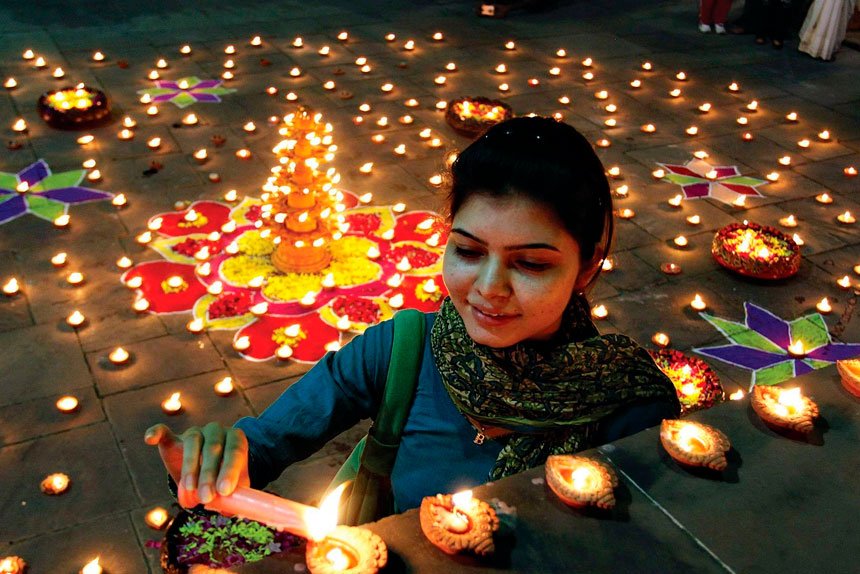
Diwali, also known as Deepavali, is one of the most cherished and widely celebrated festivals in India. The word Diwali means “a row of lamps,” symbolizing the triumph of light over darkness, good over evil, and knowledge over ignorance. Celebrated on the new moon day of the Hindu month of Kartik, Diwali marks the return of Lord Rama to Ayodhya after fourteen years of exile and his victory over Ravana. In other traditions, it honors Goddess Lakshmi, the goddess of wealth and prosperity, and Lord Krishna’s victory over Narakasura.
The festival spans five days, beginning with Dhanteras, followed by Naraka Chaturdashi (Choti Diwali), Lakshmi Puja, Govardhan Puja, and Bhai Dooj. Homes are cleaned and decorated with rangoli, flowers, and earthen lamps to welcome positive energy and prosperity. Families come together to perform rituals, exchange sweets and gifts, and share festive meals.
Diwali is also a celebration of joy and togetherness. Fireworks illuminate the night sky, while laughter and warmth fill homes and streets. In many regions, cultural programs, fairs, and community gatherings add to the festive spirit. At the same time, there is growing awareness about celebrating an eco-friendly Diwali, emphasizing the use of earthen diyas, minimal crackers, and care for the environment.
Beyond rituals and celebrations, Diwali conveys a timeless message of hope, renewal, and inner awakening. It encourages people to dispel negativity, cultivate compassion, and walk the path of righteousness. Diwali is not merely a festival of lights but a reminder that even the smallest flame can overcome the deepest darkness.
